
The short answer
The cost of starting an online Bible college depends on one big decision: whether you will seek accreditation. A non-accredited ministry training programme can launch with a small budget, because the main costs are course content and a teaching platform. An accredited, degree-granting college costs much more, because accreditation requires qualified faculty, governance, policies, library resources and years of documented operation, each with fees and staff time attached.
Rather than quote prices that change from year to year and country to country, this guide breaks down what drives each cost so you can build your own budget with current quotes.
First, decide what kind of college you are starting
Your costs follow from a few early choices:
- Credential: certificates, diplomas, or accredited degrees (associate, bachelor's, master's, doctoral)
- Audience: pastors, missionaries, lay leaders, or anyone seeking theological education
- Scale at launch: one programme of a handful of courses, or a full catalogue
- Faculty model: volunteer teachers from your ministry, paid adjuncts, or full-time faculty
- Delivery: self-paced, live classes, or a mix
A church that wants to train its own leaders with a certificate programme faces a different budget from an organisation aiming for an accredited bachelor's degree. Our guide to starting a Bible college covers these choices in more depth.
1. Legal set-up and authorisation
Before you enrol students, you need a legal entity and, in many places, permission to operate as a school or to award degrees. Requirements vary widely: some states and countries exempt religious education, others require registration or authorisation even for online programmes, and many restrict the use of words such as "college" or "university".
Cost drivers:
- forming a non-profit or ministry entity and its governing board
- legal advice on authorisation and degree-granting rules where you operate and where your students live
- registration or application fees with the relevant education authority
Budget for a lawyer who knows education law in your jurisdiction. It is cheaper than restructuring later.
2. Accreditation
Accreditation is usually the largest commitment in money and time. Agencies that accredit Bible colleges and theological schools review your mission, governance, finances, faculty qualifications, curriculum, library access, student services and outcomes.
Cost drivers:
- application and candidacy fees
- evaluation visit costs, which often include the reviewers' travel
- annual dues once you are a candidate or accredited
- staff time to write the self-study and keep records the agency requires
- meeting the standards themselves: qualified faculty, library resources, published policies
Fees differ by agency and change over time, so read each agency's current fee schedule on its own website. Most institutions spend several years moving from application to full accreditation, operating and documenting as they go. See our guide to starting an accredited Bible college, which covers the process step by step.
3. Curriculum and course development
Every programme needs a curriculum: courses, learning outcomes, reading lists, assessments and the lessons themselves.
Cost drivers:
- scholars or curriculum designers to write the programme, paid or volunteer
- recording lectures: a decent microphone, camera and lighting go a long way, while hired videographers and editors cost more
- textbooks and reading materials students must access
- the number of courses you build before launch
To keep this cost down, launch with one programme, record lectures as you teach them live, and reuse recordings in later terms. If you already have recorded sermons or teaching series, the AI course creator in Vonza can transcribe them, split them into lessons, write summaries and draft a quiz per module as a starting point. It uses AI credits, and every draft needs review by your faculty.
4. Faculty and staff
People are usually the largest ongoing cost of an accredited college. Agencies typically expect faculty with appropriate graduate qualifications and an academic leader responsible for the programmes.
Cost drivers:
- faculty pay, per course or salaried
- an academic dean or programme director
- admissions, registrar and student support roles, which in a small college may be the same person
- training faculty to teach online
Many new colleges start with adjunct faculty paid per course and volunteers from partner churches, then add staff as enrolment grows.
5. Technology
You need a website, a place to teach, a way to take applications and fees, and student records. Buying these as separate tools (a website builder, a learning management system, a payment tool, a CRM and an email service) adds subscriptions and integration work.
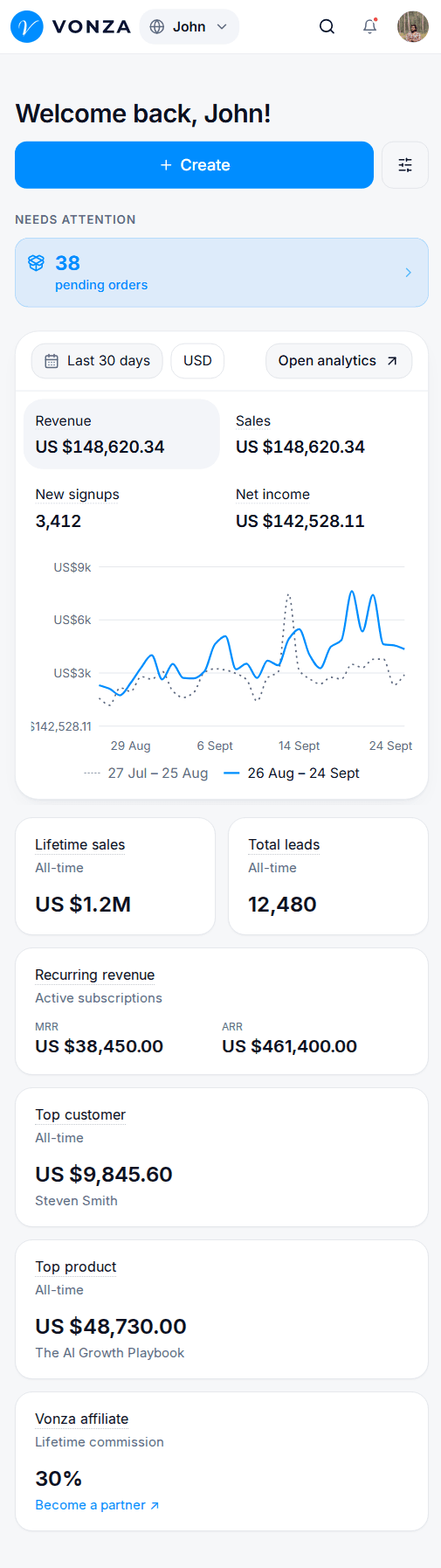
With Vonza's school management software, these sit on one platform:
- a school website where students apply and pay the admission fee, then land in your CRM for follow-ups
- degree programmes set up once with curriculum, pricing, enrolment limit and expiry
- courses with video, quizzes, assignments, drip release and completion certificates
- live classes with recordings
- a gradebook, GPA calculation and transcripts
- a student portal on your own domain
Vonza starts with a 14-day free trial, and which school features you get depends on your plan; check current details on the pricing page. If you compare learning platforms instead, check whether admissions, grades and transcripts are included or need separate tools, because each extra tool adds a subscription and another place where student data must be kept in sync.
6. Marketing and enrolment
Students have to find you. Ministry colleges often have an advantage here: partner churches, denominations and existing audiences.
Cost drivers:
- a website with clear programme pages and admissions information
- content that answers prospective students' questions
- paid advertising, if you use it
- email follow-up with enquirers and applicants
- open days or taster classes, which can run as live streams
Start with your existing networks and an enquiry form that feeds an email sequence before spending on ads.
7. Student services and library
Accrediting agencies look at what students receive beyond lectures: academic advising, technical support, access to library resources and a fair process for complaints and appeals.
Cost drivers:
- subscriptions to digital theological libraries or databases
- advising and support time
- written policies and a student handbook
Costs founders often forget
- Payment processing: card and wallet payments carry processing fees from the payment provider. On Vonza, payments go to your own Stripe account, PayPal for one-time payments, or Paystack for Nigerian naira.
- Insurance and audits: some authorisation and accreditation processes ask for audited financial statements and appropriate insurance.
- Scholarships: ministry students often need financial help. Decide how scholarships will be funded before you promise them.
- Your own time: in the first years, founders often teach, administer and recruit at the same time. Count that time, even if it is unpaid.
How to build your budget
- Decide the credential and the first programme.
- List each cost area above and get current quotes or fee schedules for each.
- Separate one-off launch costs from ongoing annual costs.
- Plan for several years before accreditation, if you are pursuing it.
- Model tuition and enrolment conservatively, and decide how scholarships will be funded.
Ways to keep costs down
- Launch one programme, not a catalogue.
- Start with certificates and add accredited degrees later.
- Partner with churches for faculty, students and funding.
- Use one platform instead of a stack of separate tools.
- Record once, teach many times.
Summary
An online Bible college can start small or aim high from day one, and the budget follows that choice. Legal set-up, accreditation and faculty are the big costs; curriculum, technology, marketing and student services complete the picture. Get current quotes for each area, launch one programme well, and grow from there. To see how Vonza runs admissions, courses, live classes and records in one place, book a demo.